AI Consultant Bangkok: What They Actually Do, Cost, and How to Pick One
What an AI consultant in Bangkok really does for small businesses, from bilingual LINE chatbots to n8n workflow automation, what the local market charges (roughly 12,000 to 60,000+ baht), and five questions to ask before hiring.
Every Bangkok small business owner has had the conversation by now. Someone, somewhere, told you AI will run your marketing, answer your customers, and file your paperwork while you sleep. Then you looked at what it would take to actually build any of that, closed the laptop, and went back to running the shop. The gap between the promise and the doing is exactly where an AI consultant lives.
This guide explains what an AI consultant in Bangkok actually does for a small business, what the local market charges, how to pick one, and how to know the engagement is working. It is written by an AI automation company, so we will try to be fair to a profession we are part of.
An AI consultant in Bangkok helps a small business choose, build, and hand over practical automations: bilingual LINE chatbots, workflow automation on platforms like n8n and Make, document processing, and AI-assisted reporting. Local market pricing commonly runs from roughly ฿12,000 per month retainers to ฿60,000 or more for fixed-scope projects. The right consultant starts from a workflow that costs you real hours, delivers something working in weeks, and teaches your team to run it.
What an AI consultant actually does
Strip away the conference-slide language and the work falls into four buckets.
- Finding the right thing to automate. The valuable consultant starts with your operations, not their toolbox: which repeated task eats hours, which handoff drops customers, which report someone rebuilds by hand every Monday. If the first meeting is a demo of their favorite model instead of questions about your week, that is a vendor, not a consultant.
- Building customer-facing automations. In Thailand this overwhelmingly means LINE: bilingual Thai-English assistants that answer enquiries instantly, qualify leads, take orders, and hand humans the edge cases. Thai customers live in LINE in a way that makes this the highest-leverage automation in the market.
- Building back-office automations. Order intake flowing into your inventory or accounting system, price lists distributed automatically, documents read and filed by AI, dashboards that assemble themselves. Usually on platforms like n8n or Make, which keep costs sane and let your own team take ownership later.
- Handover and training. A consultant who leaves you dependent is a landlord, not an advisor. The engagement should end with documentation, access, and a team that can operate and adjust what was built.
What the Bangkok market charges
A scan of active providers in the city shows consistent patterns. Fixed-scope project work typically starts around ฿60,000, with source-code handover increasingly offered as a standard term. Monthly retainers for ongoing automation and support start from roughly ฿12,000. Bilingual Thai-English support is the norm rather than a premium, and several firms work remote-first with on-site visits quoted separately.
Against those numbers, the sanity check is the same one we recommend for any marketing spend, including local SEO retainers: the engagement should name the hours it saves or the revenue it touches, and the quote should itemize what happens each month. Automation has an advantage over most retainers here, because saved hours are countable: if the chatbot deflects forty enquiries a week and each enquiry costs you five minutes of staff time, the math does itself.
How to pick one: five questions
- "Show me something you shipped for a business like mine." Not a demo environment; a live LINE bot or workflow for a comparable Thai business. Ask what broke after launch and how they fixed it.
- "What do we own if we stop working together?" Accounts, source, workflows, documentation. Fixed-scope handover terms are now common in this market; treat refusal as a red flag.
- "What will this NOT do?" An honest consultant draws the boundary: this bot handles FAQs and booking, not complaints; this automation covers ordering, not accounting. Scope honesty in the sales meeting predicts delivery honesty later.
- "Who maintains it, and what does that cost?" Models drift, LINE changes APIs, your menu changes. Know the retainer number before the build starts.
- "How do we measure whether it worked?" Hours saved, response time, orders captured. If the answer is a vibe, keep shopping.
Red flags worth walking away from
- Proposals that begin with the technology ("we use GPT-something") instead of your workflow
- No fixed scope, no milestones, pricing discoverable only by starting
- Resistance to handover terms
- No Thai-language capability when your customers are Thai
- Guarantees about outcomes no one can guarantee, a pattern we also flag in choosing profile management services
Where AI fits a local shop's actual stack
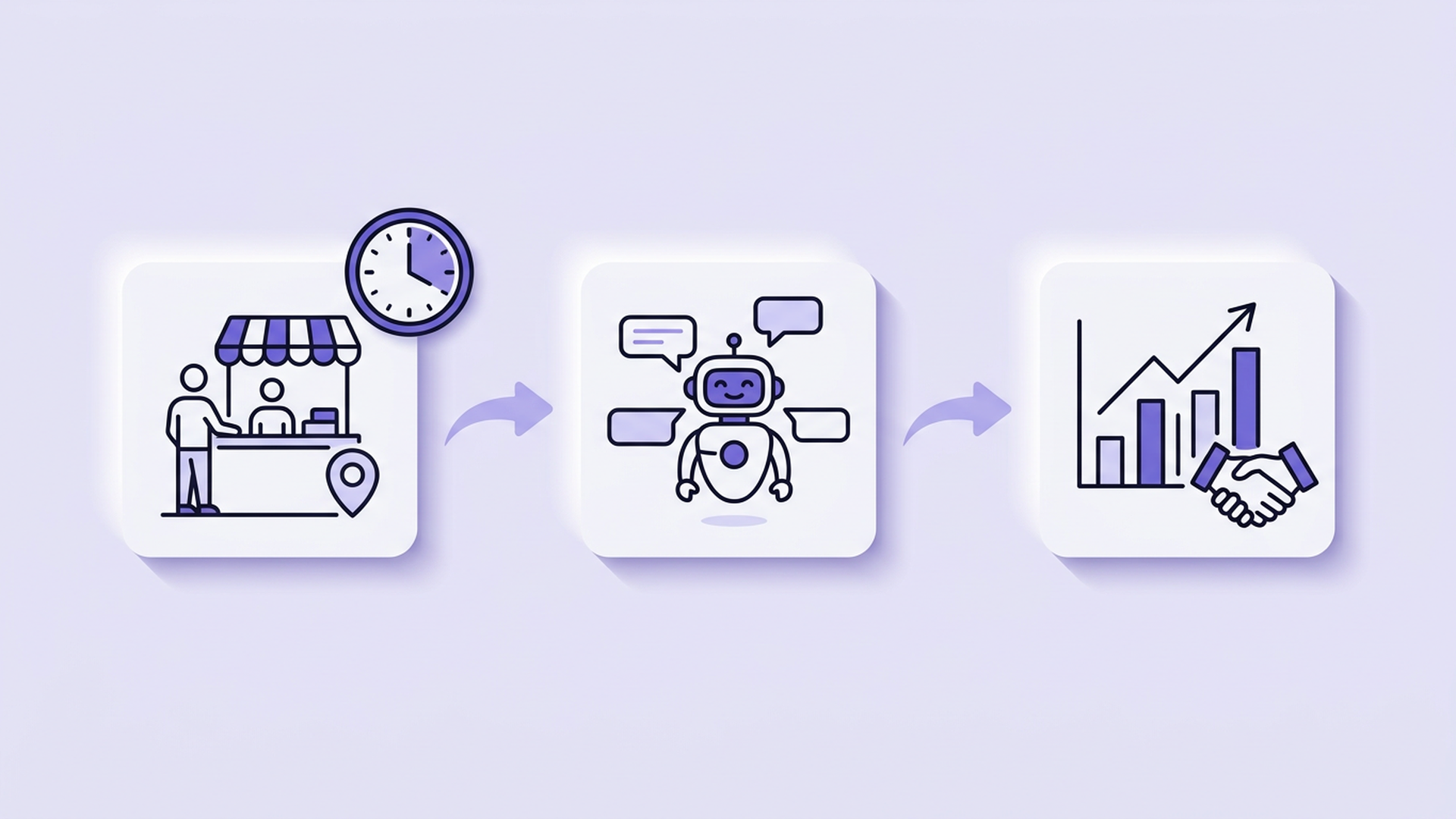
For most Bangkok small businesses the sequence is not "AI everything." It is boring-first: your Google profile complete and reviewed, your visibility measured properly, your regulars coming back. Then automation on top: the LINE assistant that never sleeps, the follow-up messages that used to depend on someone remembering. The shops winning with AI here are the ones that automated a healthy process, not the ones hoping AI would substitute for one. If your marketing foundation is still shaky, read how customers actually find shops now in our local SEO in the AI search era guide before spending on automation.
Frequently Asked Questions
Is an AI consultant worth it for a business under ten people?
Often yes, and precisely because you are small. Small teams feel every wasted hour; a single bilingual chatbot or one automated order flow can return a workday per week. The honest caveat: if you cannot yet name the specific task it would take over, you are not ready for a consultant, you are ready for a workflow audit, which any decent one will sell you cheaply or include.
Chatbot, workflow automation, or custom AI build?
Work down, not up. Chatbots first, because Thai customer expectations make them high-yield and platforms make them cheap. Workflow automation second, for internal hours. Custom model work last, and only when a genuine, recurring need survives the first two layers. Most small businesses never need the third.
Do I need someone local in Bangkok?
You need someone who can work with LINE, understand Thai customer behavior, and be reachable in your timezone during launch. Local presence helps most during the first month, when the automation meets real customers and needs daily tuning. After stabilization, remote maintenance is normal.
How long does a typical engagement take?
A scoped chatbot or single workflow: two to six weeks to live. A multi-process engagement with handover: one to three months. Anyone quoting "a few days" for anything touching your customers is quoting you a template with your logo on it, which sometimes works, and is worth knowing it is a template.
Whatever you automate first, automate from evidence. Before paying anyone, see where searchers around your business actually find you today with a free grid scan at gbppeak.com/free-maps — no signup, no card.