Easy SEO Tracking: What a Google SERP Checker Should Do For You
Easy SEO tracking is a SERP checker that runs on a schedule, measures from real coordinates, and reports average rank, visibility, and top-3 share automatically. What easy actually means, and what it costs.

Most rank tracking dies of friction, not ignorance. Week one, the owner checks positions diligently in a private window and writes them down. Week three, a supplier emergency eats Thursday. Week six, the spreadsheet is folklore. The tracking that survives is the tracking nobody has to remember, which is the entire argument for an easy SERP checker: it runs itself, and you read the results.
This guide is about what easy actually means in SEO tracking, what a Google SERP checker owes you if you run a local business, and how little effort the whole discipline can take when the tooling is set up correctly.
Easy SEO tracking means your SERP checker runs on a schedule without anyone remembering it, measures from the coordinates that match your customers, keeps comparable history automatically, and reports the three local numbers that matter: average rank, visibility percentage, and top-3 percentage. A checker without scheduling is a chore, and chores get abandoned by week six.
What a SERP checker owes a local business
A SERP checker is a tool that reports where your business appears in search results for a keyword. For a local business, "where" has two dimensions, and most checkers only handle one. The familiar dimension is the organic position, the blue-links list. The dimension that pays your rent is the map pack, which rebuilds per searcher location: three Bangkok eyewear shops, one keyword, same-day scans returned average ranks of 3.8, 5.4, and 16.0 with top-3 coverage of 68%, 28%, and 0% respectively (GBPpeak geo-grid scans, October 2026). A checker that reports one organic position for that reality is describing a different shop.
So the baseline duties: multi-point local measurement alongside organic, a schedule you set once, history that stays comparable, and numbers a busy owner can read in thirty seconds. Anything beyond that is bonus, and often distraction.
The four features that make tracking genuinely easy
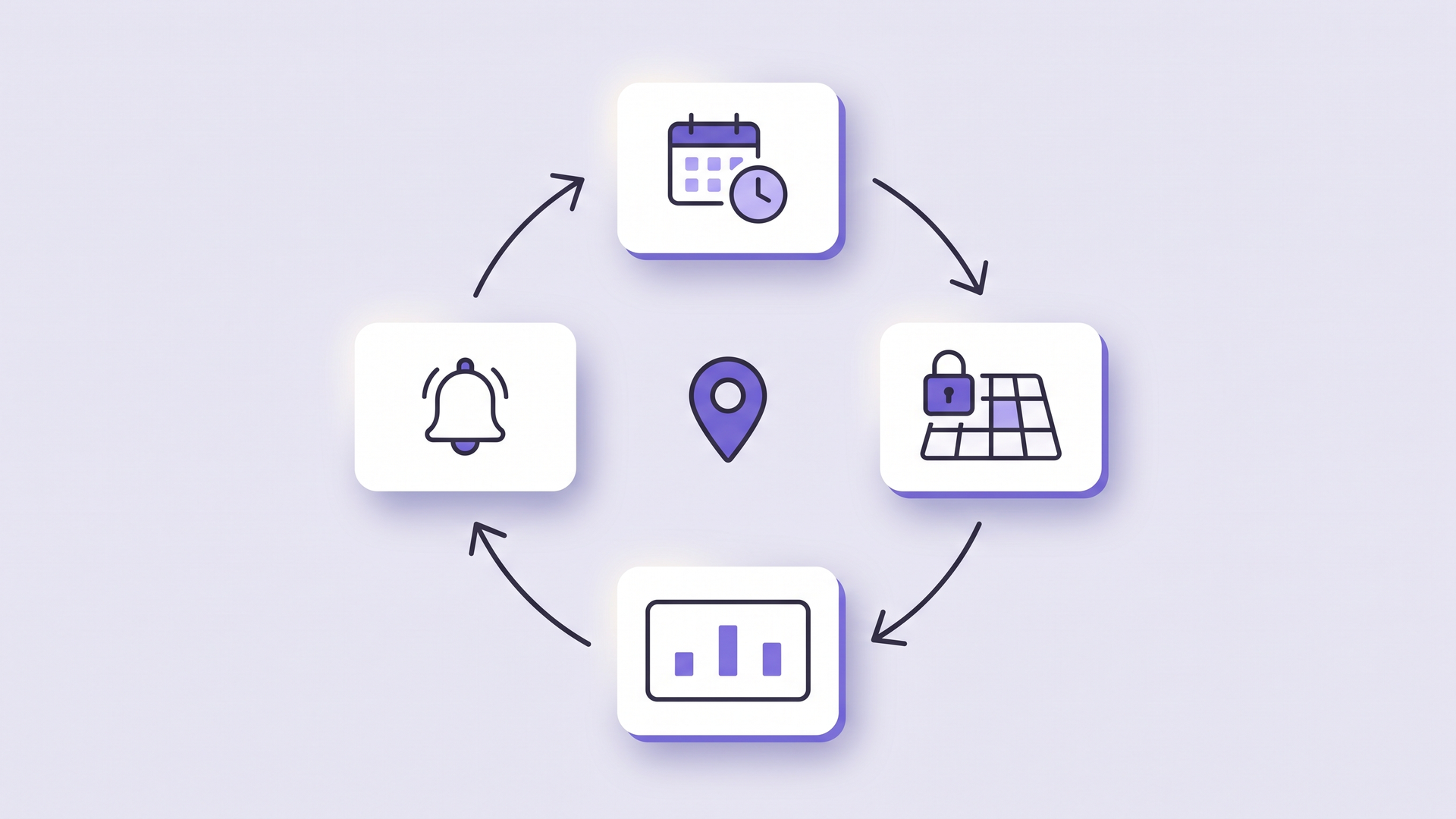
- Scheduling, not willpower. The checker scans weekly at a fixed hour without a human involved. Our platform's scheduler, for instance, polls its scan queue every sixty seconds and fires tracked keywords on their cadence; once configured, the tracking outlives every busy season. If your current method involves remembering, it will fail.
- Fixed methodology, forever. Same grid, same radius, same keywords, same day and time. Comparability is what turns numbers into information. A tool that lets every scan drift to different settings produces noise wearing a chart's clothes.
- One-screen summaries. Average rank, visibility, top-3 share, and the trend arrow. If reading your rank report takes longer than reading this sentence, you will stop reading it.
- Alerts on the exceptions. Easy tracking means silence when nothing changed and a message when something did: a dropped keyword, a vanished location, a competitor suddenly holding your best cells. You read alerts; you ignore rituals.
Easy does not mean shallow
The lazy version of tracking is one number from one browser, which is a rumor, not a measurement; the manual method done properly takes discipline most owners reasonably lack. Easy tracking is the automated version of the disciplined method: all the rigor, none of the remembering. The map rank tracker guide covers how grid scanning works; this piece is about why it should run itself.
Consider what automation actually replaces. The owner of that three-shop eyewear example above would need fifteen private-window sessions a week to approximate what one scheduled 5×5 scan records in a pass. Nobody does fifteen sessions a week. The shops with real data are not more virtuous; they set up a machine and forgot about it, which is the point.
What easy tracking costs
Less than the alternative. A free tier handles a first scan and occasional checks; GBPpeak's free scan needs no signup. Scheduled tracking starts at the entry tier, twenty-nine dollars monthly for three hundred scan points, which covers two keywords weekly on a 5×5 grid with room for a campaign check. The alternative cost is deciding blind: stocking the wrong season, chasing the wrong keyword, learning about a competitor's surge two months late. The full economics of what tracking-enabled local work should cost an operation are laid out in our local SEO cost guide.
Frequently Asked Questions
Is a free SERP checker enough?
For a first look, yes: run one free scan, see your footprint, act on it. Free tiers stop being enough the day you change something, because the value of tracking is the before-and-after, and before-and-after needs scheduled comparable history. Start free, upgrade when you begin fixing things.
How is this different from just using Google Search Console?
Search Console tells you how your website performed in organic search: impressions, clicks, queries. It does not show the map pack, and it does not show your position from different neighborhoods. A local SERP checker measures where the business appears locally, which for map-driven businesses is the number that moves revenue. Use both; they answer different questions.
Can I set tracking up for multiple locations easily?
That is precisely where ease pays off most. Each location gets its own grid and keywords on the same schedule, and the summary screen compares them. The weak branch surfaces immediately instead of hiding inside an average, which is how multi-location operators actually use these tools.
How long until the tracking shows anything useful?
The first scan is immediately useful as a baseline. Meaningful trends need three to four weekly cycles, because single-week movement is usually system noise. Set the schedule, read the alerts, and let the quarters accumulate; that is when the history becomes an asset no competitor can copy.
Easy tracking is a machine you build once and read forever. Build yours today: see where searchers around your business find you with a free grid scan at gbppeak.com/free-maps — no signup, no card.