One Headline, Three Daily Actions: Building a LinkedIn Presence
A benefit-driven headline strangers understand, plus a 30-day routine — one post, genuine comments, two personalized connects a day. Trust first, sales later.
Two consultants have identical LinkedIn profiles — same title, same years of experience. One treats the platform as a digital business card: profile set up in 2019, last post eleven months ago. The other posts three times a week, comments genuinely on industry posts, and sends two personalized connection requests a day. Two years later, one has a network that sends leads; the other has a page.
The difference was never talent. It was a headline written for strangers and thirty days of small actions, repeated. Here is that system, complete.
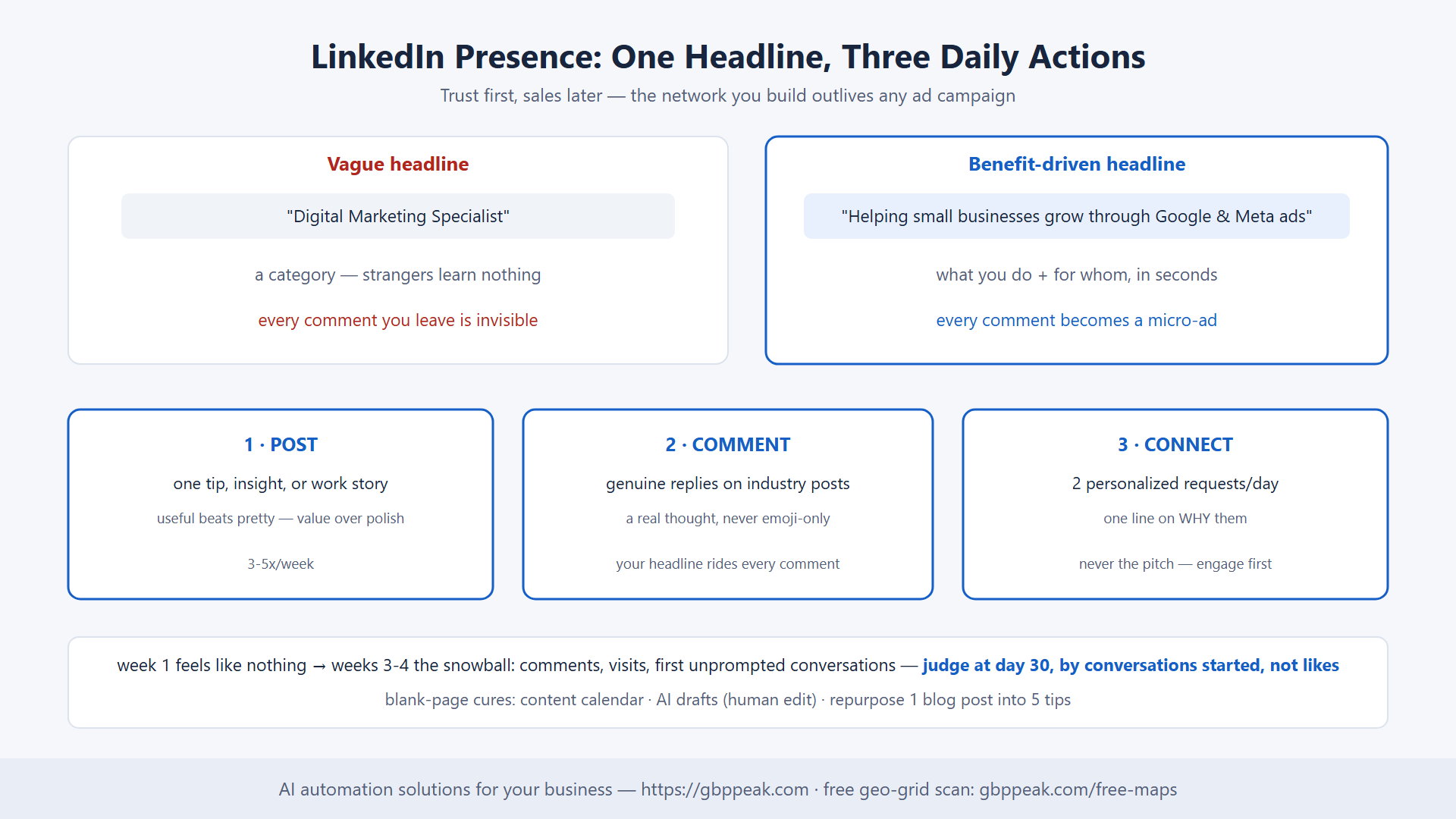
Build a LinkedIn presence in two layers. First, clarity: replace your vague job title with a benefit-driven headline stating exactly what you do and for whom ("Helping small businesses grow through Google and Meta ads" beats "Digital Marketing Specialist"), and make your profile a bridge to your website. Second, consistency: run a 30-day routine of three daily actions — one value post, genuine conversational comments on others' content, and two personalized connection requests. The cumulative effect builds algorithm visibility, organic conversations, and eventually leads — trust first, sales later.
Layer 1: The Profile as Billboard
The headline does the heavy lifting
Your headline follows you everywhere — search results, comments, connection requests. Vague titles waste that exposure; benefit-driven statements earn it.
| Vague | Clear | |
|---|---|---|
| Headline | "Digital Marketing Specialist" | "Helping small and medium businesses grow through Google and Meta ads" |
| Stranger's takeaway | A category, maybe | Exactly what you do and for whom |
| Search match | Generic terms | The specific problem you solve |
| Comment exposure | Invisible | A micro-ad with every comment |
The test: if a stranger saw only your headline, would they know what you offer and who it's for? If not, get more specific — problem solved, audience named.
The bridge to everywhere else
Your profile should carry people forward: your website in the contact section, your key services in the featured area, your real work in the experience section. Every element either builds the bridge or wastes the click.
Layer 2: The 30-Day Consistency System
The hard part of LinkedIn is not setup; it is the daily maintenance that turns an observer into a participant. The system is three actions per business day — small enough to survive busy weeks, cumulative enough to matter:
daily_trio:                    # ~20 minutes/business day
  post:
    what: "one tip, insight, or work story"
    rule: "value over production polish — useful beats pretty"
  comment:
    what: "genuine conversational replies on industry/target posts"
    rule: "no emoji-only drive-bys; add a real thought"
  connect:
    what: "2 personalized connection requests/day"
    rule: "one line on WHY them — never the pitch"
duration: "30 business days minimum before judging results"
Why week one feels like nothing
The first week produces silence, and most people quit there. But the actions compound: regular posting teaches the algorithm you're active (raising your visibility), comments put your headline in front of new audiences daily, and connection requests quietly widen the room. Around weeks three and four, the snowball starts — inbound comments, profile visits, and the first unprompted conversations. The trajectory is the small-wins momentum curve applied to a network.
Relationships First, Sales Later
The classic failure is treating every interaction as a pitch. In the first thirty days, your goal is connection — full stop. When someone accepts your request, do not open with your services; engage with their content, or send a simple thanks. The pitch arrives only when they ask what you do — and by then, the trust is already built, which is what makes the eventual conversation easy. This is the same value-first discipline as the twenty-minutes-a-day presence system, run on one platform.
Killing the Blank Page
Consistent posting dies at "what do I even say?" Three cures:
- Content calendar — plan topics a week ahead; posting becomes execution, not invention.
- AI assistants — brainstorm hooks, summarize industry news into takes, or expand one idea into a week of posts (you edit for voice and truth — AI drafts, humans decide).
- Repurposing — one blog post or podcast episode becomes five LinkedIn tips; one client question becomes one post.
idea multiplication:
  1 blog post → 5 standalone tips (one/week)
  1 client question → 1 "here's how we answer this" post
  1 industry news item → 1 your-take post (AI summarizes, you opine)
  rule: never create from scratch what you can repurpose
Beyond 30 Days
When the first month proves the rhythm, extend the system:
months 2-3: keep the daily trio; add 1 long-form post/week
            (a mini-guide) — depth compounds authority
month 4+:   audit — which posts drove conversations?
            double down on those formats
always:     measure conversations started, not likes —
            conversations are the KPI that pays
And note the second-order effect: an active LinkedIn presence becomes a trust landmark that search engines and AI tools read too — one more landmark in your findability web.
FAQs
How often should I post on LinkedIn to see results?
Three to five times a week is the practical target, but consistency outweighs frequency — daily posts for a month beat five posts in one day followed by a week of silence. The algorithm rewards sustained activity, and your network remembers who keeps showing up.
Should I pitch my services right after someone accepts my connection request?
No. Engage with their content first, or send a brief thanks-for-connecting note. Pitching on acceptance feels intrusive and earns disconnects; conversational trust built over a few interactions makes the eventual "what do you do?" conversation come to you.
How do I know if my headline is clear enough?
Apply the stranger test: if someone saw only your headline, would they know exactly what you offer and to whom? Replace job titles with the problem you solve and the audience you serve — "helping [who] achieve [what] through [how]" beats any generic role name.
What should I do when the first weeks produce no visible results?
Keep the daily trio running — the early silence is normal, not a verdict. Actions compound quietly (algorithm trust, widened network, familiarity) before conversations appear, typically in weeks three and four. Judge the system at day 30 by conversations started, not by likes.
Marathon Rules
LinkedIn presence is a compounding asset: a headline strangers understand, twenty minutes a day of post-comment-connect, value before pitches, and repurposing instead of blank-page dread. Run the thirty days honestly, then keep the rhythm — the network you build becomes a lead channel that outlives any ad campaign. Start tomorrow: fix the headline tonight. For the wider visibility picture, pair it with a free geo-grid scan at gbppeak.com/free-maps.