The Best SEO Tools for Local Search in 2026 (Honest Verdicts)
SEO tools sorted by the jobs a local business actually has, with honest verdicts and real pricing: free research tools, grid tracking from $29, citations from $39, and why the $139 giants are agency mathematics. Plus where to safely buy SEO tools online.
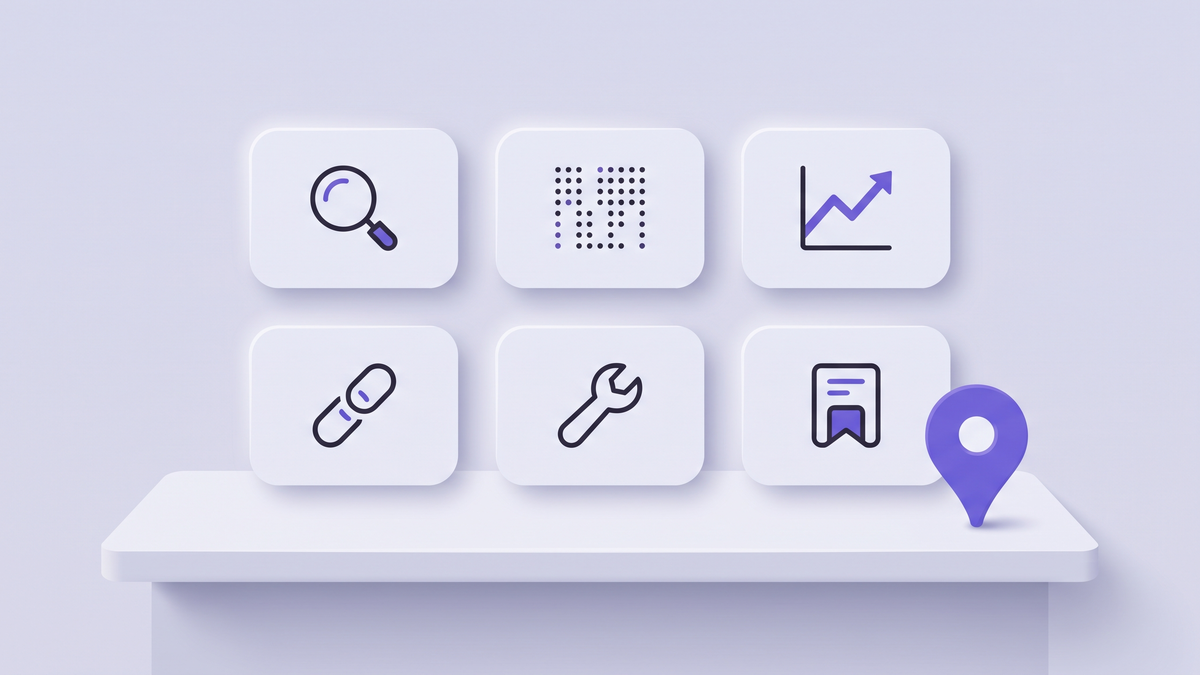
Every SEO tools list on the internet has the same shape: forty logos, no verdicts, and an affiliate link under each one. This one is different in two ways. First, it is written for local businesses, so it sorts tools by the jobs that actually move a shop's visibility instead of by logo budget. Second, it names prices honestly, including ours, so you can build a stack with arithmetic instead of faith.
Here is the state of search engine optimisation tooling in 2026, category by category, with verdicts.
The best SEO tools in 2026, for a local business, are: Google Search Console and autocomplete for free research, a grid rank tracker for map positions, a keyword tracker for trends, a citation and review platform as you scale, and one audit tool if you run a website. Entry pricing runs from free to about $139 monthly for the all-in-one giants like Ahrefs and Semrush; a complete local stack costs far less assembled piece by piece.
What counts as an SEO tool in 2026
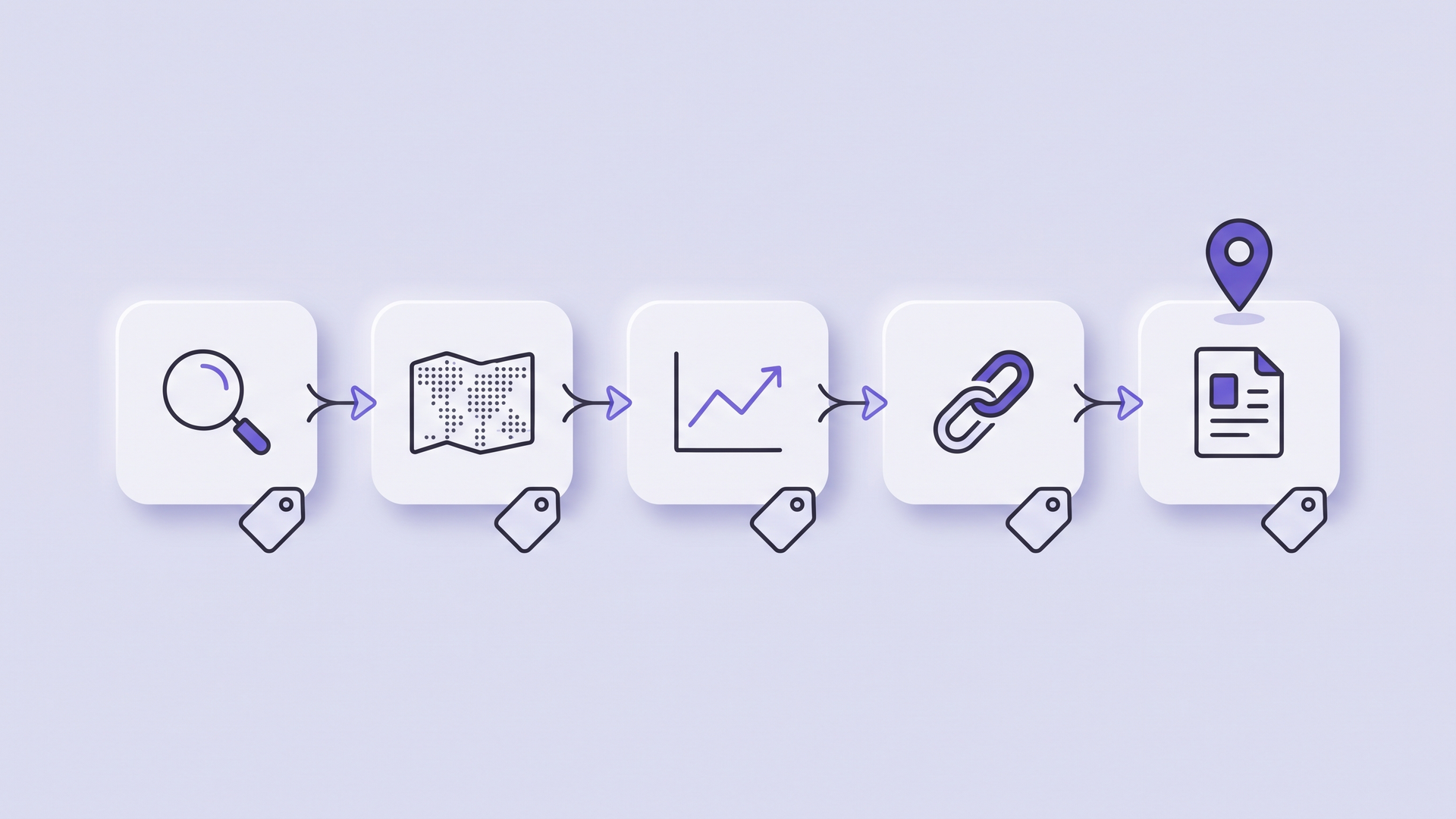
The search engine optimisation tool market splits into jobs, not brands. When people search for SEO tools, or a single SEO tool, or type the phrase in shorthand like tools seo, they are usually trying to solve one of five jobs: find what to target, track whether it is working, build authority, fix technical problems, or report to someone who pays the bills. The tooling decision is which jobs you have, and the honest answer for most local businesses is two of the five, not all of them.
The best SEO tools by job, with verdicts
- Keyword research: Google autocomplete and Keyword Planner, then a local scorer. Free autocomplete is the closest thing to eavesdropping on your market, and our keyword research method turns it into a scored shortlist. Verdict: start free; a scoring tool pays for itself only when you act on the research monthly.
- Rank tracking for local: a grid scanner. Positions vary by searcher location, so the tracker must scan multiple points. Whitespark's grids reach 225 points city-wide (whitespark.ca); GBPpeak's trackers run 5×5 to 15×15 grids from $29 monthly. Verdict: this is the category a local business buys first; the map rank tracker guide explains why.
- Keyword trend tracking: a scheduled tracker. Fixed keyword set, recurring scans, stored history; the requirements are specified in our SEO keyword tracker guide. Verdict: buy when you start changing things, not before.
- Backlinks, citations, and listings: the specialists. Ahrefs is the consensus pick for backlink data, Semrush for all-round campaigns; both start around $129 to $139 monthly (2026 comparisons track the pricing), which is agency mathematics, not shop mathematics. For local citation consistency, BrightLocal and Whitespark bundle it from $39 to $59 monthly (brightlocal.com). Verdict: local shops need the citation half, rarely the backlink half.
- Site audit: Google Search Console first. Free, official, and it reports what Google actually sees wrong. The paid auditors earn their fee on complex sites. Verdict: if you have a one-page or small site, GSC plus honesty beats a $139 crawler.
- Reporting: your tracker's built-in reports. White-label reporting is now included on mainstream platforms rather than an add-on, a point our agency tools guide covers with the numbers. Verdict: never pay extra for a logo on a PDF.
Where do you actually buy SEO tools online?
Since SEO tool shopping has no app store, the practical answer: direct from the vendor's own website, monthly billing, no resellers. Every legitimate tool in this guide sells itself directly on its own domain, and the free tiers (Search Console, Keyword Planner, autocomplete, GBPpeak's free scan) require nothing more than an account at most. Two cautions for the "SEO tools online shop" instinct: lifetime-deal marketplaces and license resellers sell abandoned or gray-market keys, and any storefront promising an SEO tool that guarantees rankings is selling a contradiction. Subscriptions you can cancel monthly are the honest shape of this market.
What a local business actually needs
The lean stack, assembled from the verdicts above: free research tools, one grid tracker, one trend tracker, and citations when you scale to multiple locations or an agency relationship. That is the entire requirement for a shop whose customers arrive from the map. Everything else on any tools list exists for national content sites, e-commerce catalogs, or agencies with many clients, and buying those capabilities because a list said "best" is how software shelves get crowded with unopened logins.
Frequently Asked Questions
What is the single best SEO tool in 2026?
There is no single best, only best per job, and anyone crowning one tool is usually paid to. The practical shortcut for local businesses: Google Search Console for free, a grid tracker for the map, and nothing else until a real problem says otherwise.
Are free SEO tools enough for a small business?
For getting found locally, largely yes: Search Console, autocomplete research, and a free grid scan cover discovery and baseline measurement. Paid tiers earn their price the day you need scheduled history across keywords and locations, because consistency is what free workflows quietly lose.
Why are Ahrefs and Semrush so expensive?
They are built for agencies and national sites: backlink indexes, PPC research, content pipelines, competitor tracking at web scale. A local shop buying one is purchasing a telescope to read a street sign. If you later run a serious content operation, the entry tiers around $129 to $139 monthly are the going rate, and the comparison articles cited above track the differences.
Should I buy an all-in-one tool or assemble separate tools?
All-in-one suits agencies managing many clients and wanting one invoice. Separate tools suit businesses that want the best instrument per job, which for local means a specialist grid tracker paired with free research tools. Our agency stack guide breaks the economics of both paths.
Every stack starts by knowing where you stand. Test any tool's claims against ground truth: run a free multi-point grid scan of your business at gbppeak.com/free-maps — no signup, no card.