
SEO Keyword Tracker Tools: What to Demand for Local Search
An SEO keyword tracker tool watches a fixed keyword set on a schedule and stores comparable history. The seven features a local tracker must have, how checkers, trackers, and grid scanners fit together, and a real tracked Bangkok keyword family.
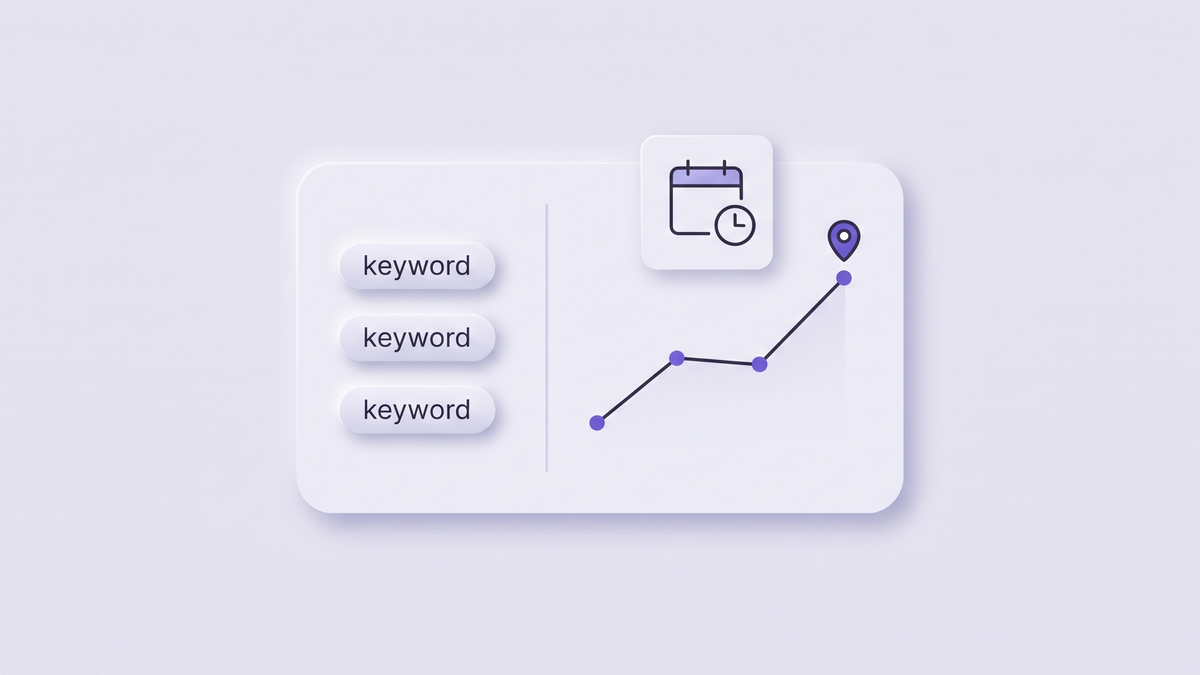
A checker tells you where you are. A tracker tells you where you are going. That distinction, boring as it sounds, decides whether your keyword data ever changes a decision. Plenty of tools will happily report a position once; almost everything a local business actually needs, proving a fix worked, catching a slow slide, knowing which keyword deserves next month's effort, lives in the second kind.
This guide defines the SEO keyword tracker tool honestly, lists what one must do for local search specifically, and maps how trackers, checkers, and grid scanners fit together.
An SEO keyword tracker tool monitors your positions for a fixed keyword set on a recurring schedule, storing every reading so you see trends instead of snapshots. For local search it must also track per location or grid point, because map positions vary by searcher coordinates. The core features are keyword-set management, scheduled scans from real coordinates, comparable history, and trend reporting that flags which keywords moved and which need work.
What is an SEO keyword tracker tool?
An SEO keyword tracker tool is software that watches a defined list of keywords over time: it checks each keyword's position on a schedule, stores the result with its date and settings, and reports the movement. The definition sounds trivial until you see what it excludes. A one-off browser check is not tracking. A tool that reports a different methodology every week is not tracking, because its history is not comparable. Tracking is a commitment to measuring the same thing the same way, repeatedly, and the tool's entire job is keeping that commitment cheap.
What a keyword tracker must do for local search
- Hold a stable keyword set with intent labels. Two to five active keywords per location, each tagged by intent, transactional, commercial, informational, so the reports group like with like. Our keyword research method produces exactly this artifact.
- Scan from real coordinates, on a grid. For map work, position is a property of place. One Bangkok shop measured 1.48 average rank with 92% top-3 coverage at 1 km and 10.55 with 44% visibility at 5 km (GBPpeak geo-grid scans, October 2026). A tracker that samples one point cannot even see that problem.
- Keep methodology frozen. Same grid, radius, language, and schedule for every reading. Any drift resets the trend line to zero meaning.
- Store history and compute trends per keyword. Week-over-week deltas, not just the latest cell. Three-week sustained movement is a signal; one-week jumps are system noise.
- Track keywords per location separately. Branches are different contests. Averaging them hides the weak branch that the tracker exists to expose.
- Alert on exceptions. A keyword dropping out of the top three, a location vanishing from results, a competitor entering your strongest cells. You should read alerts, not rituals.
- Report in the units owners decide with. Average rank, visibility share, top-3 share per keyword, plus the trend arrow. Position-without-context reports have ended careers in agency-client relationships.
Checker, tracker, or grid: which one do you need?
| Tool | Question it answers | Our full guide |
|---|---|---|
| SERP checker | "Where am I right now for this keyword?" | The honest SERP ranking check |
| Easy automated checker | "Can checking run itself on a schedule?" | Easy SEO tracking |
| Grid scanner / map rank tracker | "Where am I across the whole neighborhood?" | Map rank tracker explained |
| Keyword tracker (this page) | "What is each keyword doing over time, per location?" | You are reading it |
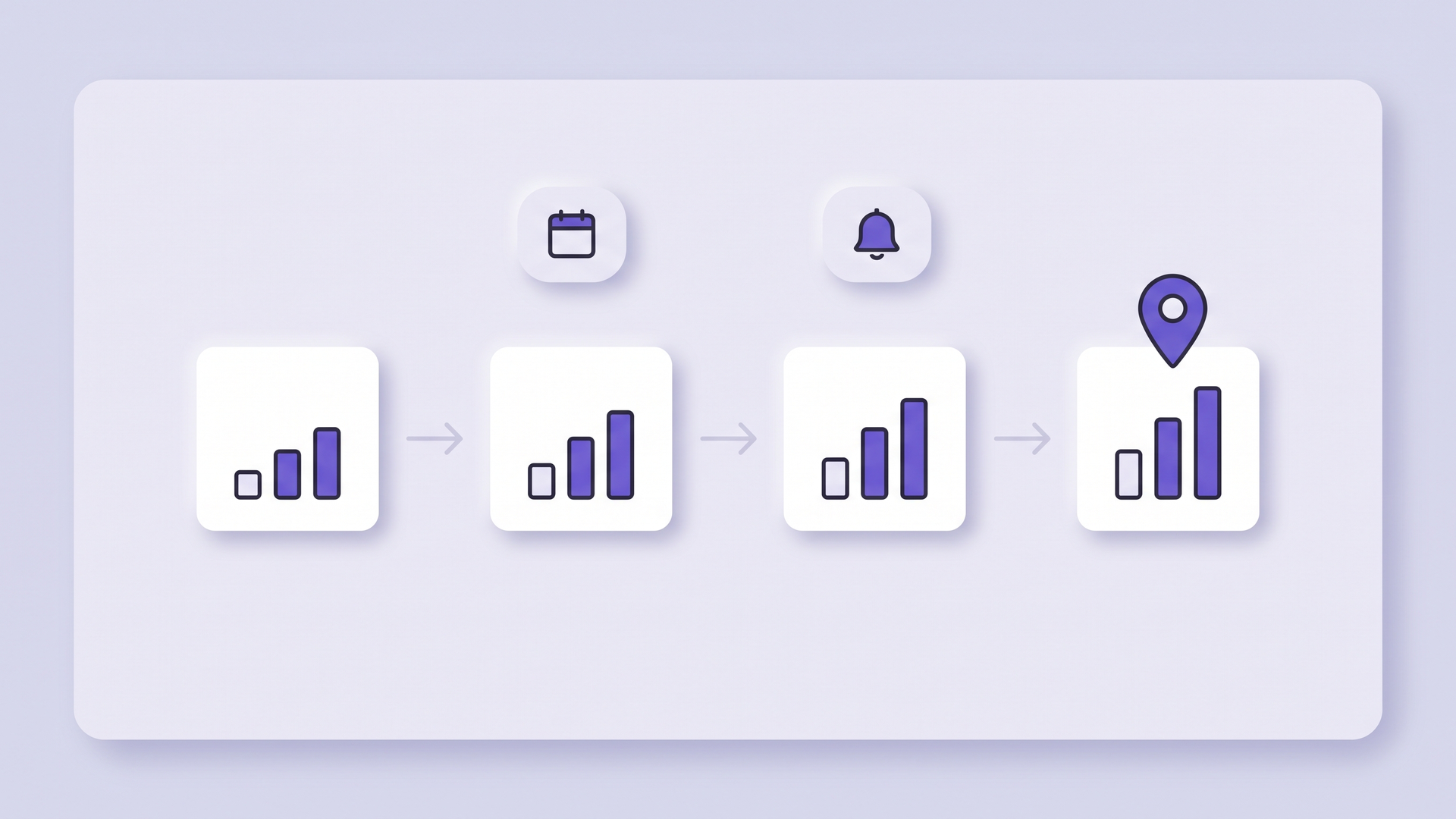
They compose rather than compete: the grid defines where, the schedule defines when, and the tracker is the system that binds keywords, places, and history into one picture. Most local businesses need the composite, which is why the features above read like one product's spec sheet.
What a tracked keyword looks like in practice
Consider a real Bangkok keyword family from a live GBPpeak analysis (October 2026): กรีกโยเกิร์ตใกล้ฉัน scored 70 with 17 autocomplete hits and an estimated 320 monthly searches, its ร้าน-prefixed sibling scored identically with 8 hits, and the generic head term อาหารใกล้ฉัน pulled an estimated 2,400 searches at difficulty 72 against the niche's 20. A tracker turns that selection into a scoreboard: the shop's chosen family holds average rank 1.16 with top-3 in 100% of its grid, a reading no competitor can copy because it accumulated week after week. When the day comes that 1.16 becomes 1.9, the tracker's history is what tells you it happened, when it started, and what changed just before.
Frequently Asked Questions
Do I need a keyword tracker or just a rank checker?
If you change nothing about your business, a checker suffices for curiosity. The moment you fix categories, chase reviews, or add services, you need before-and-after evidence, which means scheduled, comparable history. Trackers exist for decisions; checkers exist for moments.
How many keywords should the tracker watch?
Two to five per location, per language where your market is bilingual. Tracking twenty keywords produces reports nobody finishes; tracking three produces decisions. Expand only when a tracked keyword's story says another keyword deserves the seat.
Can a keyword tracker improve rankings by itself?
No, and distrust anything sold as if it could. Trackers measure; profile work, reviews, and content move the numbers. What the tracker contributes is aim: it tells you which fix moved which keyword, so effort concentrates where it pays. The fixing playbook lives in our seven-step Maps ranking guide.
How often should a keyword tracker run for local keywords?
Weekly at a fixed hour is the working standard. Daily adds noise; monthly loses the connection between a fix and its effect. The one exception is during an active change, the two weeks after a category switch or review push, where a twice-weekly pulse for that keyword alone is worth the extra points.
Every tracker's value starts with an honest baseline. Establish yours today: run a free multi-point grid scan of your business at gbppeak.com/free-maps — no signup, no card.