
Local SEO, Google Maps & Google Business Profile
How local ranking actually works: grid-based rank tracking, GBP optimization and neighborhood-level keyword strategy. Guides in English and Thai.
Latest Bangkok scan analyses — every business graded /10
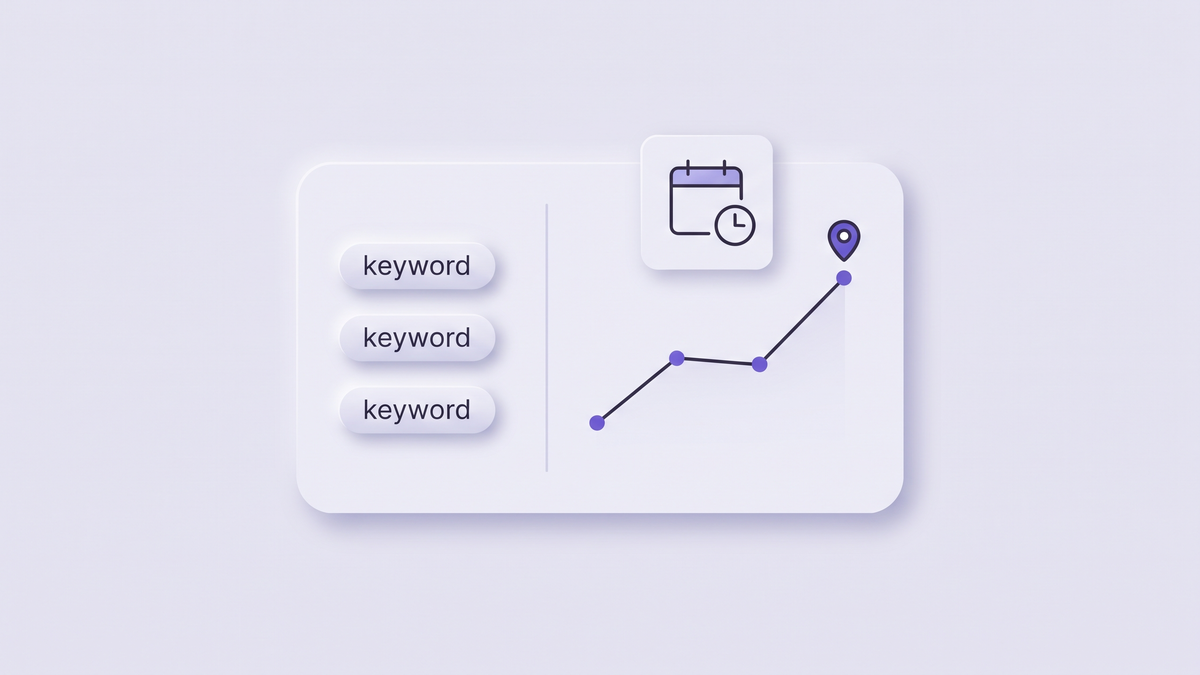
SEO Keyword Tracker Tools: What to Demand for Local Search
An SEO keyword tracker tool watches a fixed keyword set on a schedule and stores comparable history. The seven features a local tracker must have, how checkers, trackers, and grid scanners fit together, and a real tracked Bangkok keyword family.
The Address Updated. The Pin Never Moved: AI-Era Trust for Local Search
Six months ranking in the wrong neighborhood — the dashboard said "updated." Hidden map anchors, Yelp as AI training data, and the quarterly trust audit.
Beyond the Click: When Your Paid Ad Loses to the Free AI Answer
They won the auction and lost the answer — the AI Overview named the competitor. PMax inputs, out-evidencing the summary, and chatbot ads where your data is the sales script.
Discovery Without the Website: Local Marketing in the Age of AI
A ฿300k website — fifth-most-visited step in his own customer journey. Discovery has decoupled from the site; here’s the mosaic-first strategy.
Google Updates, GBP Q&A, and AI-Ready Data: The Local Search Playbook
They rewrote three pages overnight — the rankings returned on their own. The update protocol, the neglected Q&A salesperson, and briefing AI ads so they stop wasting budget.
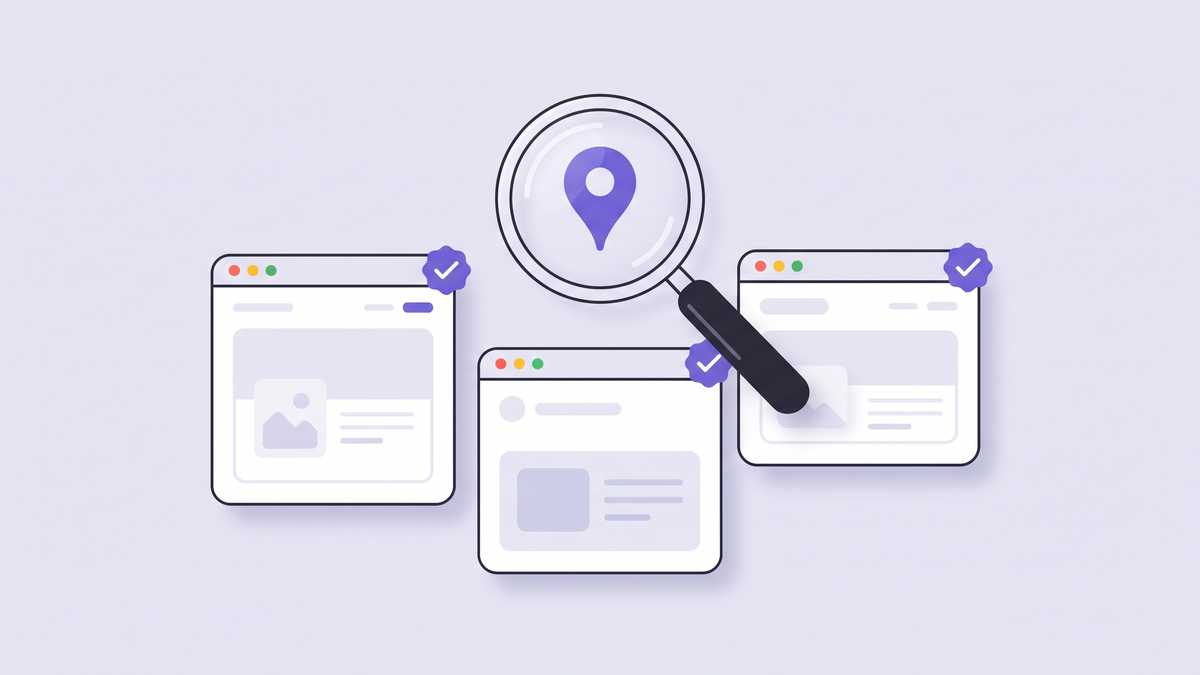
Which Search Engine Is the Most Accurate for Local Searches?
For local searches Google leads on accuracy, Apple Maps trails on POI but wins on privacy, Bing feeds the AI assistants. An honest engine-by-engine comparison, why accuracy varies street by street, and what owners should do.
Specific Categories, Information Gain, and Bookings: The Local Search Signal Strategy
"Medical Practice" for two years — while a "Cosmetic Dentist" took every veneers search. Three signals that matter now: precise categories, uncopyable content, ads judged by bookings.
Impressions Up 240%, Phone Silent: Fixing the Local Search Conversion Bridge
AI-search impressions up 240%, bookings flat. The three cracks in the conversion bridge — and why your Google profile is now the real landing page.
Bad Reviews, Entity Trust, and Ad Control: Managing Local Search Without Panic
A one-star at 9 p.m., two "guaranteed removal" agencies by Saturday — neither could. Review triage, the entity record under your profile, and keeping ad automation on a leash.
Local Search’s Three Layers: Map Pack, AI Answers, and the Phone Google Listens To
#2 in the Maps pack, invisible to ChatGPT. The map and the AI answer read different libraries — and Google now gathers data from your phone calls.

The Google PageRank Toolbar: A Short History of the Green Bar
The Google PageRank toolbar showed a zero-to-ten importance score from December 2000 until Google removed the data in 2016. Why the green bar died, what replaced it for local businesses, and the scams that still use the name.
The Practical Side of AI: From Demo to Daily Tool Without the Hype
"Everything was a miracle story or a research paper. Nobody showed the work." The content-bucket map and the honest six-week sequence to a daily-use AI tool.
Multi-Agent AI: Why the Creator Needs a Separate Critic
Brilliant Monday, mediocre Thursday — one agent holding writer and editor instincts at once. Split the roles, cap the loop, calibrate the critic.
Killing Documentation Debt with AI: Draft, Critique, Verify
The engineer left and the system’s map left with him. AI collapses documentation cost: project space, structured drafts, critic pass — v1 in half a day, updates in minutes.
Why Your AI Ignores Instructions (and the Two Fixes That Actually Work)
Five "DO NOT"s in caps — ignored anyway. Two mechanical reasons: proximity decay and goal-conflict. Move the rule, reroute the mission, self-diagnose.

Easy SEO Tracking: What a Google SERP Checker Should Do For You
Easy SEO tracking is a SERP checker that runs on a schedule, measures from real coordinates, and reports average rank, visibility, and top-3 share automatically. What easy actually means, and what it costs.
Diagrams as Code: Fixing Stale Documentation with Mermaid and AI
Twelve process diagrams, nine now wrong — the intern left in March. Diagrams as code plus AI translation: updates cost one message, docs never rot again.
Past the 80% Wall: Memory, Stability, and ROI for Reliable AI Agents
"Brilliant 80% of the time, random the rest — we can’t use that." Three disciplines that turn an AI demo into a production tool: memory, software-grade stability, scenario ROI.
One Customer, Four Records: AI Agents for Messy CRM Data Matching
Exact rules miss matches; fuzzy rules merge the wrong companies. The hybrid pipeline: rules do the volume, an AI agent judges the ambiguous 20%, you spot-check.
Building Reliable AI Tools Without Being a Developer: The Spec-Driven Method
"Add a supplier filter" — and the AI broke three working features. From vibe coding to spec-driven development: the blueprint that keeps non-coder tools alive.

Keyword Research for Local Search: The Free Autocomplete Method
Local keyword research via autocomplete in both languages, scored on demand, competition, and intent, then validated with grid scans. Real scored example from a Bangkok shop, including the head-term trap.
Automating Quotes with AI: AI Interprets, Code Calculates, Humans Approve
Quoting ate two days a week. The architecture that survived production: AI translates the messy request, code enforces the prices, a human approves in 30 seconds.
Stateful AI Automation: Why Reliable Systems Start with a Table
The chain died on order #340 and nobody knew which 40 survived. Stateful automation — a table with a status column — turns fragile chains into resilient systems.
Marketing Attribution for Small Business: What Customers Say vs What Dashboards Claim
The dashboard said Facebook; the customers said the map pin. Mine "how did you hear about us" from calls and chats — the honest source table in 60 days.